A Calgary plumber can pay for a click this afternoon or earn a map ranking that keeps producing calls months from now. That is the real decision behind local SEO or Google Ads. Both can put your business in front of people searching with buying intent. The better choice depends on how quickly you need leads, how competitive your market is, and what happens when you stop spending.
For most Canadian service businesses, the strongest answer is not blindly choosing one channel. It is assigning each channel a job, tracking revenue properly, and investing where qualified leads become customers.
Local SEO or Google Ads: the core difference
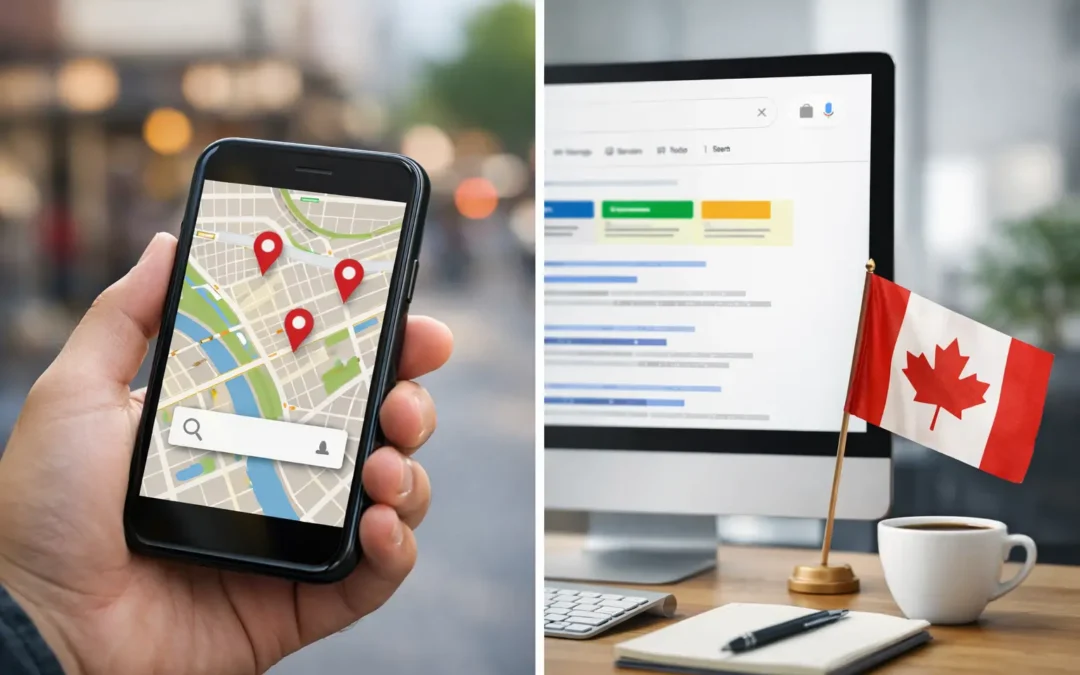
Local SEO earns visibility in Google Search and Google Maps through ongoing work on your website, Google Business Profile, reviews, local citations, content, and authority. When someone searches “dentist near me,” “Calgary employment lawyer,” or “HVAC repair in Airdrie,” local SEO helps your business appear in the map pack and organic results.
Google Ads buys placement. You select search terms, service areas, budgets, and bids. Your ad can appear above organic listings almost immediately, provided the campaign is built well and your budget can compete.
The difference is simple: Ads rent attention; SEO builds an asset. That does not make SEO automatically better. A new clinic with empty appointment slots cannot wait six months for organic momentum. An established roofer that relies entirely on paid clicks is also exposed when click costs rise or the ad budget is paused.
When Google Ads is the better first move
Google Ads is built for speed, control, and high-intent demand. A properly managed campaign can start generating calls and quote requests within days. This makes it a strong option when your business has an immediate sales target, a seasonal promotion, a new location, or a service that customers need urgently.
Emergency trades are a clear example. Someone with a burst pipe at 10 p.m. is not reading five blog posts before calling. They search, scan the results, and contact a business that looks available, credible, and close. Paid search can put your offer directly in that decision window.
Ads also work well when you need to test a market. A franchise entering a new Canadian city can learn which services, locations, and messages create calls before committing heavily to a long-term content and SEO program. For B2B firms, paid search can target highly specific commercial terms that may not have enough organic volume to justify a large content investment right away.
The trade-off is cost and dependency. Every lead has a price, and that price can change quickly. Legal, dental, restoration, insurance, and home services keywords can be expensive in major markets. If your landing page is weak, your intake team is slow, or your campaign targets broad research terms, you can spend heavily without creating profitable opportunities.
Google Ads needs more than a monthly budget. It needs conversion tracking, call tracking, negative keywords, geographic controls, strong ad copy, useful landing pages, and regular search-term review. Without those basics, it is easy to mistake activity for performance.
Use Google Ads when you need to:
- Generate demand quickly for a new, seasonal, or urgent service
- Control which services and locations receive budget
- Test offers, search terms, and landing-page messages
- Fill capacity while organic visibility is still growing
When local SEO creates more lasting value
Local SEO is usually the better long-term investment for businesses that want to reduce their reliance on paid acquisition. It helps you compete for the searches customers make every day, even when you are not actively increasing ad spend.
For a Calgary law firm, physiotherapy clinic, accounting practice, or home contractor, map visibility can become one of the most valuable lead sources in the business. Local searchers often have a clear need and a defined service area. They are looking for proof that you are legitimate, nearby, well reviewed, and capable of solving their problem.
That proof comes from more than keywords. Your Google Business Profile must be complete and accurate. Your name, address, and phone number need consistency across credible Canadian directories. Your website needs dedicated service and location pages that answer real customer questions. Reviews must be earned consistently, responded to professionally, and reflected in the way your business operates.
Local SEO takes time because Google has to see credible signals over time. In a low-competition market, meaningful improvement may appear relatively quickly. In a competitive Calgary category, it can take several months of focused work to gain traction and longer to challenge established competitors. Anyone promising permanent first-place rankings on a fixed schedule is selling certainty that search results do not offer.
The payoff is compounding visibility. A well-built local presence can generate calls from maps, organic service pages, branded searches, and reputation-driven referrals. It can also improve paid performance because customers who see your ad may search your name, read your reviews, and convert with more confidence.
Compare cost by customer value, not by click price
Business owners often ask whether SEO is cheaper than Ads. The honest answer is that it depends on your sales cycle and customer lifetime value.
A $40 click may be too expensive for a one-time $150 service call, but entirely acceptable for a commercial contract worth $15,000 a year. Likewise, a monthly SEO investment may feel difficult to justify until you understand how many booked jobs, consultations, or retained clients organic visibility can produce over time.
Do not judge either channel by impressions, rankings alone, or the number of form fills. Measure the numbers that affect revenue: qualified calls, booked appointments, sales opportunities, closed deals, cost per acquired customer, and lifetime value. If a campaign produces fewer leads but more signed clients, it is often the better campaign.
This requires clean tracking. Record which calls came from Ads, maps, and organic search. Ask every new lead how they found you. Connect marketing reports to your CRM or booking system where possible. A marketing provider should be able to explain where budget went, what it generated, and what will be adjusted next.
The practical approach: use both with different jobs
For many businesses, local SEO and Google Ads work best together rather than as competing options. Ads capture immediate demand while SEO builds the visibility that lowers your dependence on paid clicks over time.
Start by protecting the basics. Your website must load quickly, work on mobile, make calling or booking easy, and clearly explain your services, service areas, credentials, and next step. There is little value in buying traffic or earning rankings if visitors cannot tell why they should choose you.
Then use paid search selectively. Focus budget on services with the strongest margins, clearest intent, and fastest response capability. A general contractor may advertise kitchen renovations and basement developments while avoiding low-value informational searches. A clinic may prioritize treatment categories with available practitioners rather than promoting every service at once.
At the same time, build local SEO around the services and locations that matter commercially. Improve the Google Business Profile, resolve citation errors, create useful local service pages, earn reviews through a compliant process, and publish content that addresses the questions customers ask before they call. This is not about publishing pages for the sake of volume. It is about making your business the clearest local answer.
A sensible budget split
The right split changes by business stage. A new company may place more budget into Ads initially because it needs leads now, while allocating enough to local SEO to establish the foundation. An established business with strong reviews and a credible website may shift more investment to SEO and use Ads to defend high-value services or seasonal demand.
If your category has costly clicks, do not assume Ads are failing. Look at close rates and average deal value. If SEO is moving slowly, do not assume it is ineffective. Check whether the work includes the essentials: technical fixes, local relevance, content quality, review growth, citations, and authority. Results usually fail when strategy is incomplete, not because the channel is inherently wrong.
Choose the channel that matches your current constraint
Choose Google Ads when your primary constraint is time. You need inquiries now, you have a strong offer, and you can respond to leads quickly. Choose local SEO when your primary constraint is rising acquisition cost and you need a durable source of local visibility.
If both constraints apply, build a coordinated search program. SEO Pros Canada helps Canadian businesses connect local search, paid campaigns, reputation, content, and conversion-focused websites into one measurable growth plan. The goal is not more marketing activity. It is more qualified opportunities at a cost your business can sustain.
The next customer searching for your service is already showing intent. Make sure your business is visible when they are ready to choose, and make sure the path from search to phone call is worth the investment.