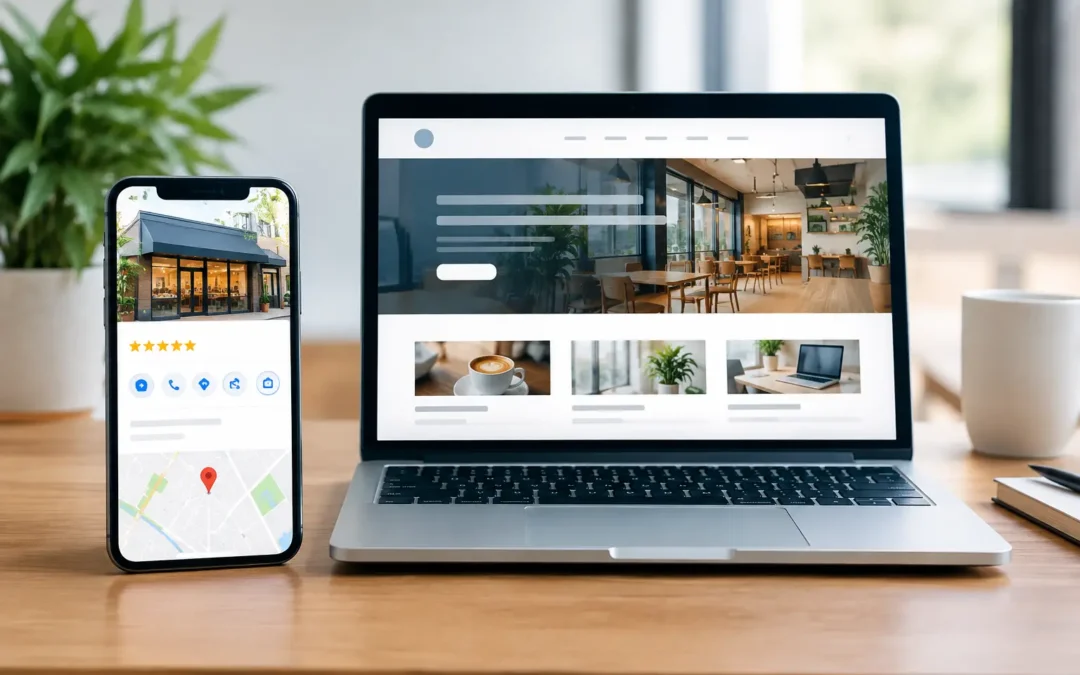
A customer in Calgary searches for an emergency plumber, a family lawyer, or a nearby dental clinic. They do not want a marketing lesson. They want a credible business they can call now. That is where the Google Business Profile versus website question becomes a real revenue decision, not an academic SEO debate.
Some business owners assume a Google Business Profile is enough because it appears in Maps and local results. Others invest heavily in a website but neglect the profile that puts them in front of ready-to-call local customers. Both choices leave opportunities on the table. A strong local marketing strategy uses each asset for the job it does best.
Google Business Profile Versus Website: The Core Difference
Your Google Business Profile is your business listing inside Google’s ecosystem. It can show your company name, primary category, service area, hours, phone number, reviews, photos, posts, products, and directions. When it is properly optimized, it can appear in Google Maps and the local map results for searches with immediate local intent.
Your website is the property you control. It gives you room to explain your services, prove your expertise, target multiple search terms, publish case studies, collect leads, and guide visitors toward a call, booking, quote request, or purchase. Google controls the layout and rules of your profile. You control the experience on your website.
That distinction matters. A profile is built to help searchers make a fast local decision. A website is built to turn attention into confidence and confidence into a qualified lead.
For a single-location business with a straightforward offer, a profile may generate calls quickly. A locksmith, cleaning company, salon, or restaurant can benefit enormously from Maps visibility. But a profile rarely answers the detailed questions that stop a high-value buyer from contacting you. It cannot properly explain a complex legal service, compare financing options, show project portfolios, or support a B2B buyer researching a six-figure contract.
Where Google Business Profile Wins
A complete, active profile is a local lead-generation machine when people already know what they need. Searches such as “physiotherapist near me,” “Calgary roofing company,” or “accountant open Saturday” signal that the customer is close to taking action. The local results often appear before traditional organic listings, making profile visibility valuable.
Google Business Profile also carries social proof at the exact moment a prospect is comparing options. Star ratings, review volume, recent responses, business hours, and real photos can influence who gets the call. For businesses competing in crowded Calgary service markets, this can be the difference between a booked appointment and a missed opportunity.
It is particularly effective for driving phone calls, direction requests, and quick website visits. A customer can tap to call without reading a long page. That convenience is a major advantage when the service is urgent or easy to understand.
There is a catch: your competitors are in the same local results. If their reviews are stronger, categories are more accurate, photos are newer, and profiles are more active, they may earn the click even when your service is better. Local visibility requires ongoing work, including review management, accurate business information, relevant categories, quality photos, and trustworthy local citations.
Where Your Website Does the Heavy Lifting
A website gives your business the depth needed to rank beyond a small map area and convert people who need more than a phone number. It can target individual services, industries, neighbourhoods, and buyer questions with dedicated pages that Google can understand and rank.
Consider a Calgary commercial contractor. A Google Business Profile can help the company appear for local searches, but the website can build pages for tenant improvements, medical clinic construction, retail build-outs, and project management. It can show completed projects, explain the process, answer procurement questions, and make the company look equipped for serious work. That is how you attract higher-value opportunities rather than only broad, price-sensitive enquiries.
Your website also protects your marketing investment. Google can change profile features, suspend listings, alter map result layouts, or favour a different local ranking signal. Those changes can affect traffic overnight. A well-built website gives you an owned asset that supports organic search, paid advertising, email campaigns, social media, and referrals.
The best websites are not online brochures. They are sales tools. Every important page should make it easy for visitors to understand what you offer, why they should trust you, where you work, and what action to take next. Slow load times, vague messaging, weak calls to action, and generic stock content cost businesses leads every day.
Why a Profile Alone Is Risky
A Google Business Profile can look like a free replacement for a website. It is not. It is a powerful channel, but it is rented space. Google owns the platform, the visibility rules, and the customer journey around your listing.
Profiles also have limited space for persuasive content. You can add service descriptions and posts, but you cannot create the same structured experience as a website. That creates a problem for companies where trust, detail, or differentiation matters. Legal practices, healthcare providers, home builders, financial professionals, SaaS companies, and B2B service firms usually need much more context before a prospect will convert.
There is also the issue of measurement. A profile can report calls, website clicks, and direction requests, but it cannot provide the full picture of how visitors behave, which pages influence leads, or which campaigns produce revenue. Your website is where stronger tracking, lead attribution, conversion forms, and landing pages become possible.
A profile-only strategy may be sensible during the earliest stage of a very small business. It is not a long-term growth plan for a company that wants to outrank competitors, expand service areas, or build a recognizable brand.
Why a Website Without a Profile Loses Local Leads
The opposite mistake is just as common. A polished website may rank organically, yet lose valuable calls because the Google Business Profile is incomplete, unverified, or ignored.
Local prospects often compare businesses without visiting every website. If your profile has outdated hours, no recent reviews, poor images, or an unanswered question, you create uncertainty before the customer ever reaches your site. Meanwhile, a competitor with an active profile can look more established and more responsive.
Your profile and website should also agree. Inconsistent business names, phone numbers, service areas, or hours can confuse customers and weaken trust signals. Consistency across your website, Google profile, and major online directories supports local SEO and reduces friction for people trying to contact you.
The Better Strategy: Make Them Work Together
The practical answer to Google Business Profile versus website is not choosing one. It is assigning each one a clear role in your sales funnel.
Your profile should capture high-intent local demand. Keep the business information accurate, select precise categories, add original photos, collect legitimate reviews, respond professionally, and link visitors to the most relevant page on your website. Do not send every click to a generic homepage if a dedicated service page will answer the searcher’s need faster.
Your website should convert and expand that demand. Build focused pages around your core services and the areas you genuinely serve. Use clear proof, including credentials, testimonials, project examples, team information, and transparent next steps. If you invest in Google Ads, use purpose-built landing pages instead of sending paid traffic to a broad homepage.
The connection between the two becomes especially valuable when a customer sees your profile first, visits your website to validate the decision, then returns later to call. That path is common. Local buyers often research in short bursts across mobile and desktop before choosing a provider.
For businesses with multiple locations, the strategy needs more structure. Each legitimate location needs an accurate profile, while the website needs location pages that offer useful, distinct information. Copying the same thin page for every city is unlikely to build trust or lasting rankings. Give each location page a real purpose, including its services, team, local proof, contact details, and relevant service-area information.
What Should You Prioritize First?
If your business has no verified Google Business Profile, start there. Claiming and completing it can create a faster path to local visibility, particularly for companies with a physical location or defined service area. At the same time, make sure the linked website has at least strong core service pages and a reliable way to contact you.
If you already have a profile but your website is dated, slow, or thin, the website is likely the larger growth opportunity. Better content and conversion paths can help you rank for more searches and turn existing profile traffic into more leads.
The right priority depends on your market, service value, competition, and business stage. A new mobile detailing company may see quick wins from Maps and reviews. An established Calgary law firm will need both local profile strength and authoritative website content to compete for meaningful cases.
Visibility is only valuable when it produces calls, form submissions, booked appointments, and sales. Build a Google Business Profile that earns the first click, then give customers a website that makes choosing your business feel like the obvious next step. That is the local growth system SEO Pros Canada helps businesses build and improve.