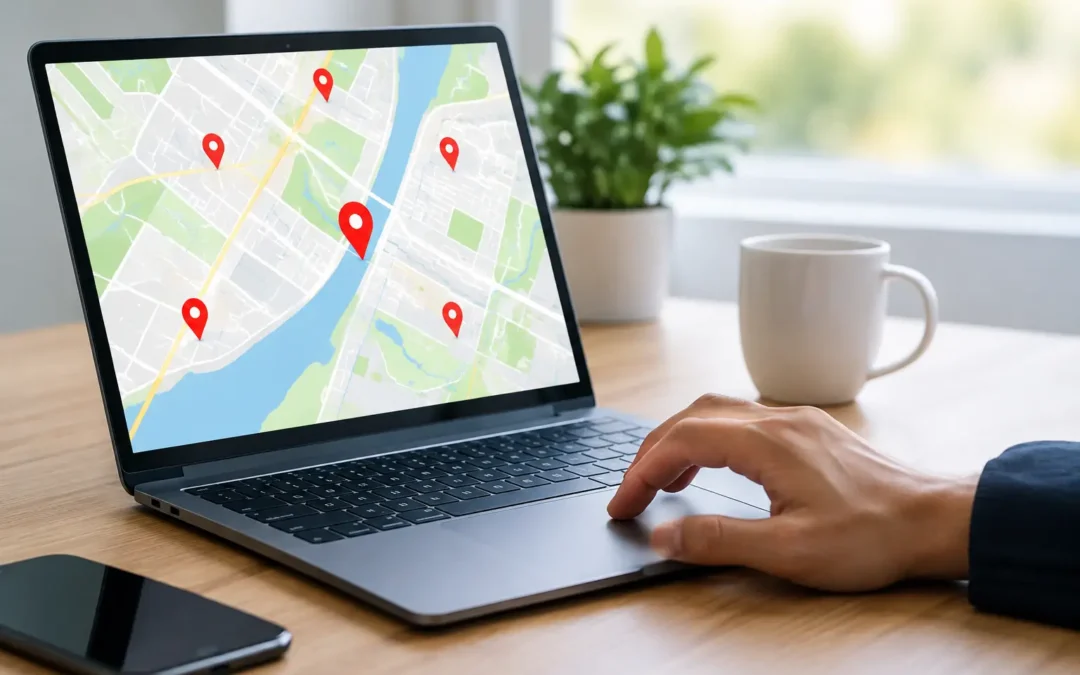
A Calgary plumber can have a better website than every competitor and still lose calls to the company sitting in the top three map results. That is why business owners need to understand how to improve map rankings: Google Maps visibility puts your business in front of people who are ready to call, visit, book, or request a quote.
Map rankings are not won by adding a few keywords and waiting. Google is trying to recommend the most relevant, trusted, and nearby option for each searcher. Your job is to give Google clear, consistent evidence that your business deserves that recommendation.
How to Improve Map Rankings Starts With Your Google Business Profile
Your Google Business Profile is the foundation of local visibility. If it is incomplete, inaccurate, or poorly maintained, every other local SEO effort has less impact. A profile that is merely claimed is not a profile that is competing.
Start with the business basics. Your business name, primary phone number, website, address, hours, and service areas must match what customers see elsewhere online. Use your real-world business name, not a version stuffed with services or neighbourhood names. Keyword stuffing can trigger edits, suspensions, and a loss of trust.
Choose the most accurate primary category available. This is one of the strongest relevance signals Google uses. A personal injury lawyer should not choose a broad category just because it sounds impressive if a more specific option better describes the practice. Add relevant secondary categories, but do not select every service you could possibly provide. Precision beats clutter.
Complete the services and products sections with the terms customers actually use. Explain what each service includes, where it is available, and what makes it valuable. For a Calgary roofing company, that may mean separate, clear service entries for roof repair, roof replacement, emergency leak repair, and commercial roofing.
Photos also matter because they help customers decide whether to engage. Add current exterior, interior, team, vehicle, project, and product images. Businesses with genuine proof of their work look more credible than profiles built from stock photography and a logo. Keep adding fresh images as your business changes.
Build Relevance Around the Searches That Produce Revenue
Ranking for broad searches is not always the goal. A dental practice may want more visibility for “emergency dentist,” while a B2B consultant may care more about “HR consultant Calgary” than generic searches for business services. Start by identifying the services with the strongest margins, lead quality, and capacity.
Then align your local presence around those priorities. Your profile categories, services, website pages, page titles, on-page copy, and reviews should all reinforce the same core offering. This is not about repeating a keyword until the page becomes unreadable. It is about making it easy for Google and prospective customers to understand exactly what you do.
Location relevance needs the same discipline. If you serve Calgary, Airdrie, Cochrane, Okotoks, and Chestermere, create useful location-focused content where it makes sense. Explain service availability, project experience, local regulations, or practical differences customers in those areas care about. Thin pages that swap one city name for another rarely create a durable advantage.
For businesses without a public storefront, set up the profile correctly as a service-area business. Do not use a virtual office, mailbox, or employee home address to force a presence in a market. Google can remove or suspend listings that violate its guidelines, and recovering a suspended profile can cost far more than doing it properly from the beginning.
Reviews Turn Visibility Into Trust
Reviews influence map performance, but their biggest commercial value is often what happens after you appear in the results. A business with a 4.8-star rating, recent detailed feedback, and professional responses gives searchers a reason to choose it over a nearby competitor.
Make asking for reviews part of your normal customer process. The right moment is shortly after a successful job, appointment, purchase, or milestone, when the value is still clear. Send the request by text or email, keep it simple, and train staff to ask consistently. A handful of reviews collected once a year will not compete with a steady stream of current customer feedback.
Never buy reviews, pressure customers for five stars, or ask employees to pose as clients. Those shortcuts can damage your credibility and put the profile at risk. You also do not need to respond with generic marketing language. Thank positive reviewers specifically, and respond to negative feedback calmly, privately where appropriate, and with a genuine effort to solve the issue.
Detailed reviews naturally mention services, staff, and locations. That context can support relevance while helping future customers understand what working with you is like. The objective is not just a higher review count. It is a reputation that makes the click, call, or direction request feel low-risk.
Strengthen the Local Signals Beyond Google
Google compares your profile information with other trusted sources across the web. This is where citations matter. A citation is any online mention of your business name, address, phone number, or website, including industry directories, local business listings, chambers of commerce, and supplier sites.
Consistency is essential. If your old suite number appears on one directory, an outdated phone number appears on another, and your business name is abbreviated differently on several more, Google receives mixed signals. Customers do too. Inaccurate listings can send leads to the wrong place before ranking is even part of the problem.
Audit the major listings and correct the information at the source. Then look for relevant local opportunities. A Calgary contractor may benefit from a local builders’ association listing, while a Canadian healthcare provider may need accurate profiles on trusted medical directories. Quality and relevance matter more than submitting the business to hundreds of low-value sites.
Local authority also grows through legitimate mentions from community organizations, event sponsorships, professional associations, local media, partners, and satisfied clients. These signals take more effort than mass directory submissions, but they are harder for competitors to copy and more meaningful to customers.
Make Your Website Support Your Map Position
A Google Business Profile does not operate in isolation. Google often uses the linked website to verify services, locations, business legitimacy, and overall quality. If the profile promises one thing and the website is vague, slow, or difficult to use on a phone, that gap can limit results.
Build clear pages for your core services. Include practical details such as who the service is for, what the process looks like, service areas, pricing factors where appropriate, and clear next steps. Add your business name, address, and phone number consistently, especially on the contact page and site footer.
Mobile experience deserves special attention. Map searchers are frequently on a phone and close to taking action. A slow page, hidden phone number, confusing form, or pop-up that blocks the screen can waste the traffic you worked to earn. Strong local SEO should improve leads, not just produce a better ranking report.
Use local business schema where it accurately reflects your company information. It can help search engines interpret key details, but it is not a substitute for a well-built website or a credible profile. Technical improvements support the strategy. They do not replace it.
Track Rankings the Way Customers Actually Search
A single map ranking is not the whole story. Results can change based on the searcher’s location, device, search history, business category, and the exact wording they use. A company may rank well near its office but lose visibility across the wider service area.
Measure performance by neighbourhood or postal area, priority service, and business outcome. Watch calls, website clicks, direction requests, form submissions, booked appointments, and qualified leads. If rankings rise but leads do not, investigate the profile messaging, reviews, hours, pricing expectations, and conversion path.
It also helps to study competitors that consistently appear above you. Look at their categories, review velocity, services, photos, website depth, and local mentions. The goal is not to copy every move. It is to identify the gaps that are costing your business visibility and fix the highest-value ones first.
Stay Active Without Chasing Every Tactic
Local search performance is cumulative. Profile updates, review management, citation cleanup, better service pages, and local authority work compound over time. Businesses that treat Maps as a one-time setup task often get passed by competitors that keep proving they are active, accurate, and trusted.
If your map visibility is stuck, start with the fundamentals before spending more on ads or chasing shortcuts. SEO Pros Canada helps Canadian businesses turn local search work into measurable calls, leads, and revenue by focusing on the factors that customers and Google can actually verify.
The strongest map ranking is not simply the one that looks good in a screenshot. It is the position that puts your business in front of the right local customer at the moment they are ready to choose.