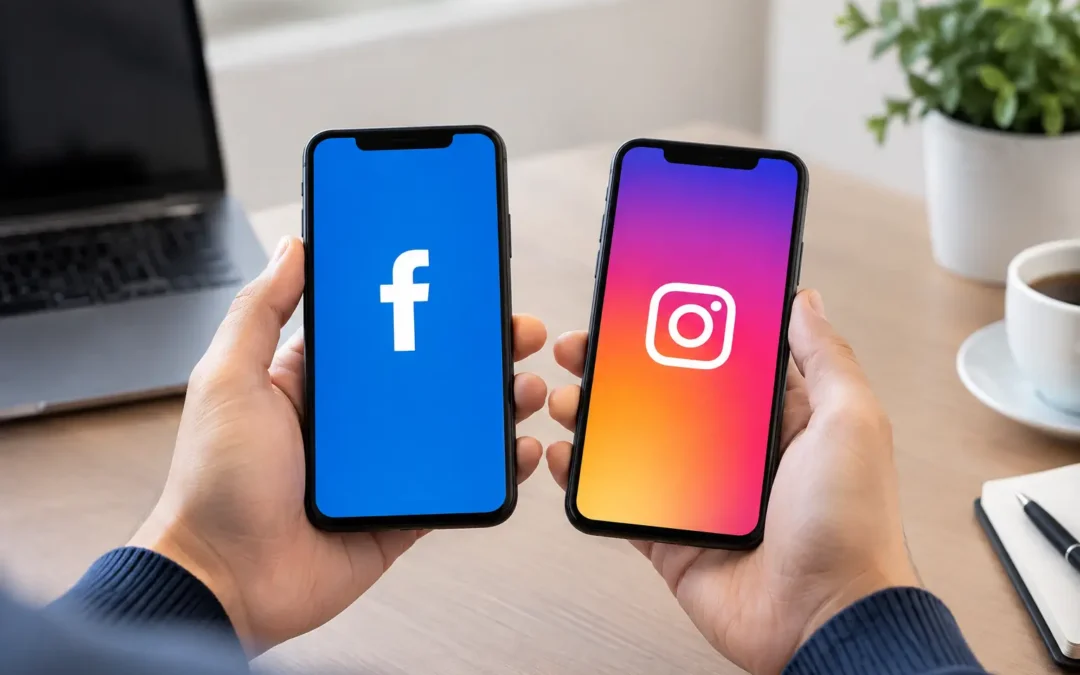
A Calgary home service company can spend the same $2,000 on Meta advertising and get completely different results depending on where the ads appear. That is the real question behind Facebook ads versus Instagram ads. It is not about which platform is more popular. It is about which platform puts your offer in front of people who are most likely to call, book, request a quote, or buy.
Both platforms run through Meta Ads Manager, share many targeting options, and can work together in one campaign. But they do not earn attention in the same way. Facebook often supports research, community trust, and direct-response offers. Instagram is built around visual discovery, short-form video, and brand appeal. Canadian businesses that treat them as interchangeable often waste budget before they learn what their market actually responds to.
Facebook Ads Versus Instagram Ads: The Core Difference
Facebook is still a powerful lead-generation channel because people use it to follow local businesses, participate in community groups, read recommendations, and evaluate offers. A homeowner may see an ad for furnace repair, click to read reviews, and submit a lead form without ever leaving the app. For professional services, healthcare practices, B2B companies, legal firms, and local trades, that behaviour matters.
Instagram is more visual and more immediate. People scroll quickly through Reels, Stories, and image-led feeds. Your ad has less time to explain itself, but it can create demand fast when the offer is easy to understand and the creative looks native to the platform. A cosmetic clinic showing a treatment result, a restaurant promoting a new menu item, or a fitness studio featuring a class can make Instagram work very hard.
The key distinction is intent within the feed. Facebook users are often prepared to read, compare, comment, and click. Instagram users are more likely to respond to a strong visual, a clear benefit, and an easy next step. Neither is automatically better. The right choice depends on your audience, sales cycle, offer, and ability to produce effective creative.
Audience Demographics Matter, But They Are Not the Whole Story
Facebook generally reaches a broader age range, with particular strength among adults who make household, financial, and business purchasing decisions. That makes it a practical starting point for companies selling high-consideration services. If your customer needs to discuss the purchase with a spouse, request multiple quotes, or establish trust before calling, Facebook can give your message more room to work.
Instagram tends to be stronger for younger and middle-aged audiences, especially customers who follow brands, creators, local venues, and lifestyle content. It is often a natural fit for retail, hospitality, beauty, wellness, fitness, events, real estate, and consumer products. It can also work for service businesses, but the ad must translate a complex service into a quick, compelling message.
Do not make a channel decision based on age alone. A 45-year-old business owner may actively use Instagram, while a 28-year-old homeowner may research contractors through Facebook groups. Start with your actual customer data: who buys, where they live, what problem they need solved, and how long they take to decide.
Local businesses need local signals
For Calgary and Canadian service businesses, geographic targeting is only the starting point. A campaign should match the language of the local market, seasonal demand, service area, and customer concern. A roofing company may need storm-season messaging. A dental clinic may need ads around new-patient availability. A B2B software provider may need to speak to a specific job title or operational problem.
The platform matters, but relevance matters more. A generic ad aimed at a broad Alberta audience can burn through budget quickly on either channel.
Creative Is Where Instagram Usually Demands More
Instagram is less forgiving of poor creative. A stock photo, a dense block of text, or a generic corporate graphic will often disappear in the feed. Strong Instagram ads use clear visuals, vertical video, concise on-screen copy, customer results, product demonstrations, and a direct call to action. The content should feel like it belongs beside the posts people chose to watch.
Facebook can also benefit from video, but it gives advertisers more flexibility. A strong testimonial, a promotional graphic, a carousel explaining services, or a detailed lead-generation offer can perform well. This is useful for businesses with offers that require context, such as estate planning, commercial cleaning, accounting, orthodontics, or managed IT services.
That flexibility does not mean Facebook ads can look careless. The strongest creative on both platforms answers three questions immediately: What are you offering? Why should the customer care? What should they do next?
If you do not have the capacity to consistently produce quality video and visual content, Facebook may give you more room to test proven direct-response formats. If your business already has strong photography, before-and-after results, product footage, or a confident spokesperson, Instagram may deliver efficient attention.
Costs Are Influenced by Competition, Not Just Platform
Many businesses ask whether Facebook or Instagram is cheaper. The honest answer is that cost depends on the auction. Your industry, location, audience size, campaign objective, ad quality, seasonality, and competitors all affect what you pay.
A click is not the metric that pays the bills. A low-cost Instagram click is useless if visitors bounce from the landing page or submit poor-quality leads. A higher-cost Facebook lead may be worthwhile if it produces booked consultations and closed revenue. The numbers that deserve attention are cost per qualified lead, appointment rate, sales rate, customer acquisition cost, and return on ad spend where revenue can be tracked.
This is why a campaign needs proper conversion tracking before budget scales. Track phone calls, form submissions, booked appointments, purchases, and qualified pipeline stages whenever possible. Otherwise, you are judging performance by activity rather than business outcomes.
When Facebook Is the Better Bet
Facebook often deserves priority when trust and explanation drive the sale. It is especially useful for local service businesses, professional firms, healthcare providers, B2B companies, and organizations targeting decision-makers who need more information before acting.
It also performs well for lead-form campaigns when speed matters. A prospect can request a quote or consultation without loading a separate page, reducing friction on mobile. That convenience needs a fast follow-up process. If your team takes two days to respond, even an affordable lead can go cold.
Facebook can be highly effective for remarketing, too. Someone who visited your service page, watched a video, or started a form can see a follow-up ad built around testimonials, limited availability, or a more specific offer. For longer sales cycles, this repeated exposure helps build familiarity.
When Instagram Is the Better Bet
Instagram is a strong choice when your product or service can be understood visually in seconds. It is ideal for showing transformation, lifestyle, craftsmanship, atmosphere, and social proof. Reels can generate substantial reach, while Stories can make time-sensitive promotions feel personal and immediate.
For an aesthetics clinic, fitness brand, restaurant, retailer, wedding vendor, or real estate professional, Instagram can put high-impact work in front of customers before they begin a formal search. That is valuable because effective marketing does not only capture existing demand. It can create preference before the customer is ready to buy.
Instagram can also support recruitment, franchise growth, and brand awareness campaigns. Still, awareness should have a clear purpose. If the campaign cannot connect attention to site visits, inquiries, store traffic, or future remarketing audiences, it may be attractive but difficult to justify.
The Best Answer Is Often Both, With Controlled Testing
Because Facebook and Instagram share Meta Ads Manager, you do not always need to choose one permanently. Start with a campaign that uses both placements, then review performance by placement after enough data has accumulated. If Instagram is delivering lower-quality leads, reduce spend there. If Reels are generating engaged traffic at an efficient cost, create more video variations.
Do not rely on platform recommendations alone. Meta is designed to spend your budget, not protect your margins. A disciplined campaign tests one variable at a time: audience, offer, creative, landing page, or placement. When several elements change at once, you cannot identify why results improved or declined.
A practical testing plan should include a clear offer, a conversion-focused landing page or lead form, multiple creative versions, and a defined follow-up process. For many businesses, the biggest performance gap is not Facebook versus Instagram. It is the gap between generating a lead and contacting that lead quickly with a useful next step.
SEO Pros Canada approaches paid social with the same standard applied to search marketing: visibility only matters when it creates qualified opportunities and measurable revenue. The strongest channel mix is the one that matches your buyer, proves its value through tracking, and can scale without destroying lead quality.
Choose the platform based on evidence, not assumptions. Put a focused budget behind a real offer, measure the leads that turn into customers, and let the numbers tell you where your next advertising dollar belongs.