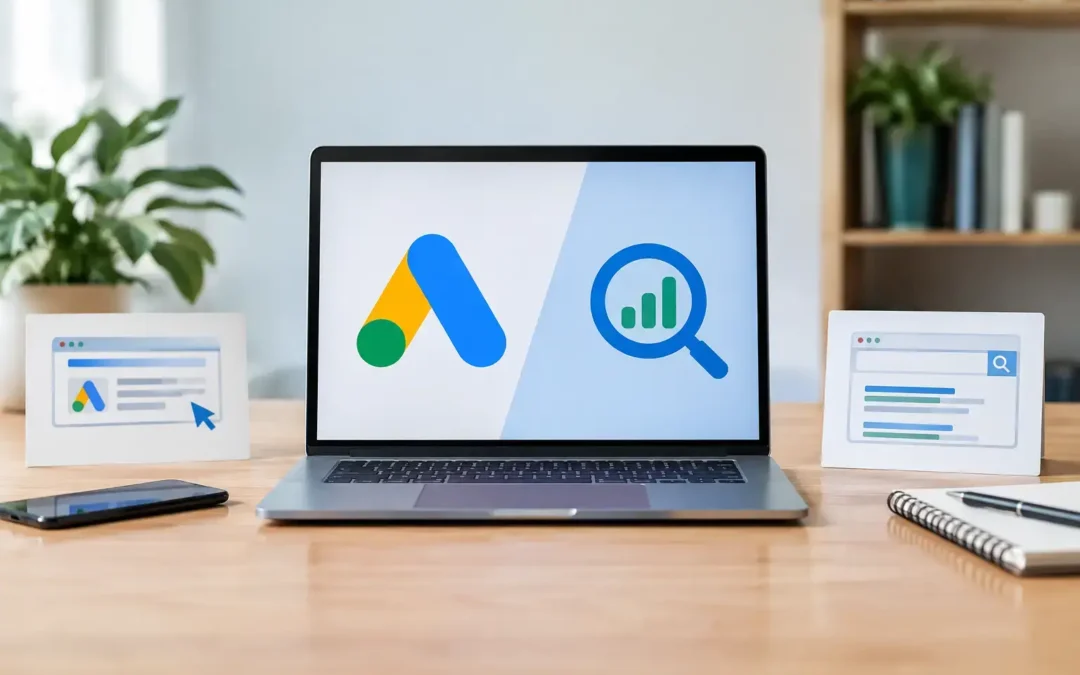
A Calgary dental clinic needs new patient bookings this month. A B2B software company needs a predictable pipeline six months from now. Both may search for the same answer: Google Ads versus SEO. The right choice is not about picking the channel with the loudest promises. It is about matching your marketing spend to your sales cycle, margins, competition, and growth targets.
Google Ads can put your business in front of ready-to-buy searchers quickly. SEO builds visibility that continues to earn clicks after the work is done. One rents attention. The other builds an asset. Smart businesses often use both, but they do not fund them blindly or expect identical results.
Google Ads versus SEO: The Core Difference
Google Ads is paid placement in Google search results. You choose keywords, set a budget, write ads, and bid for visibility. When a prospect clicks, you pay. A well-managed campaign can generate calls, form submissions, purchases, and booked consultations shortly after launch.
SEO is the process of improving your website so it earns organic visibility in Google. That includes technical website improvements, service-page optimization, local SEO, content, reviews, citations, and authority-building links. You do not pay Google for each organic click, but earning and protecting rankings requires consistent expert work.
The most practical difference is timing. Paid search can create demand capture almost immediately, assuming there is enough budget and your landing pages convert. SEO usually takes longer because Google needs to crawl, assess, and trust your site against established competitors. For a newer website in a competitive Calgary market, meaningful organic movement may take several months rather than several days.
That delay does not make SEO less valuable. It makes it a different investment. When your pages rank for high-intent searches such as “Calgary family lawyer,” “commercial HVAC repair,” or “bookkeeping services near me,” they can bring qualified traffic day after day without a charge for every click.
When Google Ads Is the Better Move
Google Ads is often the right first move when speed matters. A business opening a new location, filling a seasonal schedule, promoting a time-sensitive offer, or recovering from a sudden drop in leads may not have months to wait for organic rankings.
It also works well when search intent is clear and commercial. Someone searching “emergency plumber Calgary” is not looking for a broad educational article. They need help now. A precise ad, a strong call extension, a fast-loading landing page, and a simple booking path can turn that urgency into revenue.
Paid search gives you control that SEO cannot fully match. You can target selected service areas, schedule ads during staffed hours, pause underperforming campaigns, test offers, and direct visitors to a page built for one conversion goal. That is valuable for businesses that need to learn quickly which services, messages, and locations produce profitable leads.
The trade-off is simple: the leads stop when the spend stops. Click costs can also rise fast in legal, healthcare, home services, financial services, and competitive B2B categories. A campaign that generates plenty of traffic can still waste budget if broad keywords, weak negatives, poor location settings, or unqualified calls are left unchecked.
Google Ads is not a slot machine. It needs active management. Search terms must be reviewed, conversion tracking must work, calls must be qualified, and lead quality must be tied back to real sales outcomes. Cheap clicks mean very little if they do not become paying customers.
When SEO Delivers a Stronger Return
SEO is the better long-term play when your business relies on ongoing search demand. Most service companies do not need a one-time burst of traffic. They need a steady stream of calls, quote requests, appointments, and consultations at a cost that does not climb every time the market gets more competitive.
Local businesses benefit heavily from SEO because customers frequently search by service and location. A strong Google Business Profile, accurate Canadian citations, location-relevant service pages, consistent reviews, and a trustworthy website can improve visibility across map results and organic listings. For a Calgary business, local relevance is not a minor detail. It is often where the lead is won or lost.
SEO also has a compounding effect. A useful page targeting one service can rank for dozens of related searches. Helpful content can answer early-stage questions, build trust, and bring future buyers back when they are ready. Technical improvements can lift the performance of your entire site, not just one campaign.
Still, SEO is not instant and it is not guaranteed by publishing a few blogs. Rankings depend on your starting point, the strength of competing websites, your reputation, website quality, local signals, and whether the content actually answers what searchers need. Any agency promising a specific #1 ranking without examining the market is selling certainty it cannot control.
The better question is whether the SEO plan is connected to revenue. Ranking for a vague, high-volume term may look impressive in a report, but ranking for searches that trigger calls and quote requests is what grows a business. That means prioritizing profitable services, realistic opportunities, conversion-ready pages, and transparent reporting.
Cost, Competition, and Lead Quality
Many business owners assume SEO is free because organic clicks do not carry a direct Google charge. It is not free. It requires strategy, content, technical work, local optimization, reputation support, and ongoing refinement. The difference is that the value can continue beyond the month you invest.
Google Ads usually has a clearer short-term cost. You can see spend, click volume, and conversions quickly. However, the true cost per acquisition includes more than your ad budget. It includes management fees, landing-page work, sales follow-up, and the cost of leads that never qualify.
SEO can be harder to judge too early. A well-built campaign may spend its first phase repairing site issues, improving core pages, cleaning inaccurate listings, and creating the foundation Google expects. Those actions may not produce an overnight lead spike, but they are often necessary before a business can compete for valuable local searches.
Lead quality depends less on whether the visitor came from an ad or an organic listing and more on intent, relevance, and the next step. Both channels fail when the offer is unclear, the page is generic, the contact form is cumbersome, or calls go unanswered. Marketing brings opportunity to the door. Your website and sales process must make it easy to act.
The Best Strategy Is Often a Phased One
For many Canadian businesses, the practical answer is not Google Ads or SEO. It is Google Ads first, SEO alongside it, then a deliberate shift as organic visibility grows.
Paid search can generate immediate demand while providing valuable data. You can see which services produce calls, which locations convert, what language prospects use, and where your sales team closes the best jobs. That intelligence can sharpen SEO priorities instead of building content around assumptions.
At the same time, SEO reduces dependence on paid clicks over time. As your strongest service and local pages gain visibility, you may be able to lower ad spend on terms where you already hold strong organic positions. Or you may keep ads running on the most valuable searches to dominate more real estate on the results page. The right decision depends on margins, capacity, and competitive pressure.
A home services company with open technicians may push Ads aggressively during peak demand. A law firm with high case values may invest in both channels because one retained client can justify a substantial acquisition cost. A growing B2B company with a longer sales cycle may use Ads for high-intent demo terms while SEO builds authority around the problems its buyers research for months.
How to Choose Without Wasting Budget
Start with the business outcome, not the channel. Define what a qualified lead is, what it is worth, how quickly you need it, and how many leads your team can handle. If you cannot answer those questions, no marketing dashboard will give you a useful answer.
Choose Google Ads when you need speed, have a clear offer, can fund ongoing clicks, and have someone available to respond to leads promptly. Choose SEO when you want durable visibility, have services people actively search for, and can commit to consistent improvement rather than a short-term experiment.
Before investing heavily in either channel, make sure your website earns the click. It should load quickly, explain why customers should choose you, prove credibility with reviews or case evidence, and make the next action obvious. Traffic is only valuable when it turns into business.
SEO Pros Canada helps businesses build custom search strategies around actual growth goals, not generic packages or vanity metrics. The strongest plan is the one that gives you leads now while building a search presence your competitors will have a harder time taking away.