
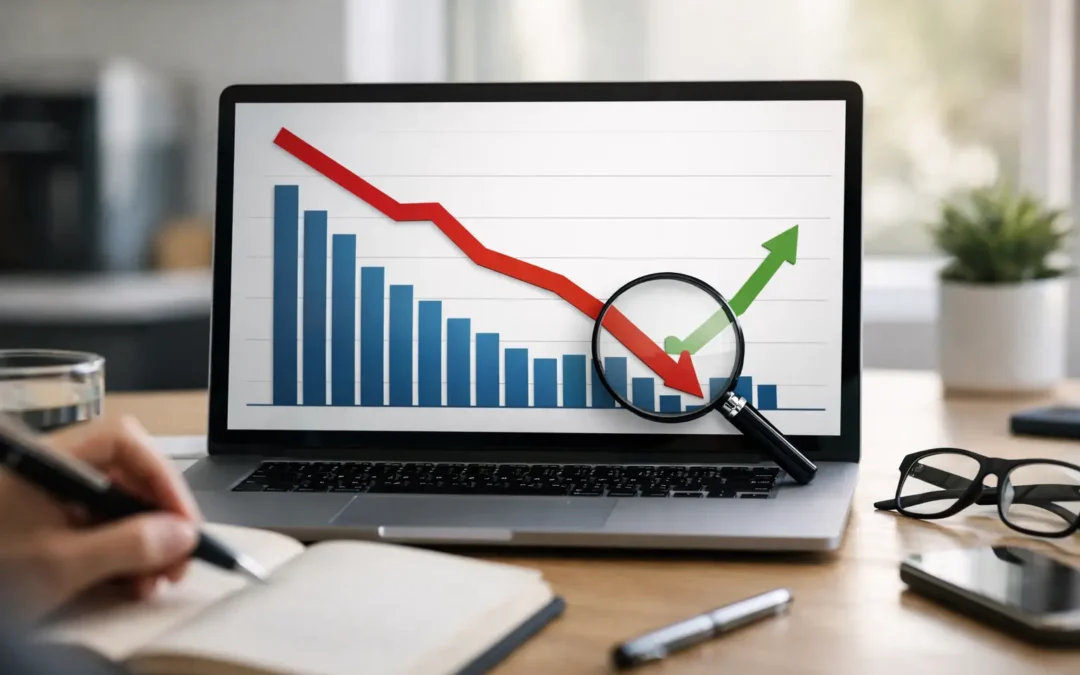
A rankings drop rarely shows up quietly. One week your phone is ringing, form fills are steady, and key pages are pulling in qualified traffic. The next, your best terms slide down the page and leads dry up. If you are trying to figure out how to recover lost rankings, the worst move is guessing. The right move is finding the exact cause, fixing it in the right order, and measuring whether visibility comes back.
That matters because not every ranking loss has the same root problem. Some drops come from a Google update. Some come from technical mistakes after a site change. Others happen because competitors improved faster, search intent shifted, or your content simply stopped being the best result. Recovery gets easier once you stop treating every drop like the same emergency.
How to recover lost rankings without wasting weeks
The first step is to confirm what actually dropped. Was it a handful of high-value keywords, one service page, an entire directory, or the whole website? A broad decline usually points to technical, indexing, or authority issues. A page-level decline often points to content quality, search intent mismatch, weak internal linking, or stronger competitors.
Look at timing closely. If rankings fell overnight, something likely changed fast – a migration, robots directive, noindex tag, broken canonicals, server issue, or algorithm update. If the decline happened gradually over several weeks, the cause is often competitive pressure, content decay, thinning authority, or poor engagement signals tied to search intent.
For most businesses, the biggest mistake is jumping straight into rewrites before checking whether Google can still crawl, index, and trust the page. You do not recover rankings by polishing copy on a page that was accidentally deindexed.
Start with the pages that make money
Not every ranking drop deserves the same level of urgency. If a blog post lost traffic for an informational query, that matters less than a service page that used to generate consultations. Prioritize pages tied to revenue first.
For a Calgary law firm, that might be practice area pages. For a dental clinic, it could be location pages or high-converting treatment pages. For a B2B company, it is often the core solution pages that drive demo requests. Recovery work should follow business value, not vanity metrics.
Once you know which pages matter most, compare three things: the old version of the page, the current search results, and the competitors now outranking you. That tells you whether the problem is internal, external, or both.
Check for technical issues before touching content
Technical SEO problems can erase rankings fast, especially after redesigns, platform changes, plugin updates, or developer deployments. Start with indexability. Make sure key pages are still live, canonicalized correctly, and not blocked by robots.txt, noindex tags, JavaScript rendering issues, or redirect chains.
Then review site performance and stability. If Googlebot is hitting server errors, pages are timing out, or mobile usability took a hit, rankings can slip. Core Web Vitals are not always the main cause of a rankings drop, but severe performance issues can make recovery harder, especially in competitive markets.
Also check internal linking. Businesses often lose rankings after reorganizing navigation or deleting old pages without preserving link equity. If an important page suddenly has fewer internal links pointing to it, Google may treat it as less important than before.
This is where a disciplined process pays off. Fix crawl and index issues first. Restore redirects next. Rebuild internal links after that. Only then should you start reworking content.
Review search intent, not just keywords
A page can be well optimized and still lose because it no longer matches what Google wants to rank. Search intent shifts more often than many businesses realize. A keyword that once favoured service pages may now favour guides, comparison pages, map results, or local business listings.
If you are targeting a commercial term and the top results are now more trust-heavy, more local, or more detailed than your page, you need to adapt. That does not mean stuffing in more keywords. It means making the page a better fit for what searchers expect when they land there.
For local service businesses, this often means stronger location relevance, clearer proof points, stronger reviews and trust signals, and better conversion content. For B2B and SaaS brands, it may mean deeper problem-solution content, more product clarity, and better supporting pages around the main commercial query.
Update thin, stale, or underpowered content
If technical issues are not the cause, content quality is usually next. Google does not reward pages because they exist. It rewards pages that satisfy the query better than the alternatives.
That means your page should answer the search clearly, cover the topic with enough depth, show expertise, and make the next step obvious. If your competitors have built stronger pages with clearer structure, fresher information, better visuals, stronger trust signals, and more complete supporting content, rankings will move in their favour.
When updating content, avoid cosmetic edits. Changing a few headings or adding 200 words is not a recovery plan. Improve the page in ways that matter. Tighten the headline. Clarify the offer. Expand weak sections. Add location context where relevant. Include proof, examples, FAQs only if they genuinely help, and stronger calls to action. Remove fluff. Keep the page focused on the real search need.
A lot of businesses lose rankings because their content was written for algorithms first and buyers second. That strategy does not hold up for long.
Rebuild authority if competitors pulled ahead
Sometimes your pages are fine, but the sites above you are simply stronger. They may have better backlinks, stronger local citations, more branded searches, better reviews, or a stronger content ecosystem around the topic.
This is where recovery becomes less about fixing damage and more about closing the gap. If your competitors have gained authority while your site stood still, on-page changes alone may not be enough. You may need stronger digital PR, better backlink acquisition, citation cleanup, review growth, and more supporting content that reinforces your topical authority.
For local businesses, reputation signals matter more than many owners think. If your competitors have accumulated stronger reviews, more consistent business information across the web, and better local relevance, local rankings can slip even when your website has not changed much.
That is one reason businesses work with a full-service team like SEO Pros Canada. Ranking recovery often crosses technical SEO, local SEO, content, and reputation management at the same time.
Be careful with overcorrection
One of the fastest ways to prolong a ranking loss is changing too much at once. If you rewrite every important page, change templates, adjust title tags sitewide, and launch a new linking strategy in the same week, you make it harder to know what helped and what hurt.
Recover in controlled steps. Fix critical technical issues first. Update priority pages second. Improve supporting signals third. Then give Google time to recrawl and reassess. Some recoveries happen within days, especially after technical fixes. Others take weeks or months, particularly when authority or trust has eroded.
Patience matters, but passive waiting does not. You should be monitoring rankings, impressions, clicks, indexation, crawl stats, conversions, and competitor movement the whole time.
How to recover lost rankings after a Google update
If your drop lines up with a confirmed or widely observed update, resist the urge to hunt for a loophole. Broad updates usually reward better overall quality, usefulness, and trust rather than one specific technical tweak.
Start by looking for patterns. Did your informational content fall more than service pages? Did local rankings drop while organic pages held steady? Did pages with weak original value lose ground? Pattern recognition helps you avoid random fixes.
Then compare affected pages against what now ranks. Are the winning pages more specific, more credible, more useful, more current, or more aligned with search intent? That comparison is more valuable than chasing rumours about the update itself.
If the update exposed a quality gap, recovery usually means improving the full page experience and site trust over time. There is no reliable shortcut.
What a strong recovery process looks like
A strong recovery plan is simple, but not simplistic. It starts with diagnosis, not assumptions. It focuses on the pages that generate business. It fixes technical blockers before content. It aligns pages with current search intent. It strengthens authority where competitors have pulled ahead. And it measures outcomes based on traffic and leads, not just rank trackers.
The trade-off is that real recovery work is rarely instant. If your rankings dropped because of one broken directive, the fix may be quick. If the issue is weaker content, lower authority, or a changing search landscape, the path back takes sharper strategy and consistent execution.
That is the part many businesses miss. Ranking recovery is not about getting back to where you were. It is about building a stronger search presence than the one that slipped in the first place.
If your rankings have dropped, treat it like a business problem, not a mystery. The sooner you identify the real cause and act with precision, the faster you give your site a real chance to win back visibility, leads, and revenue.