
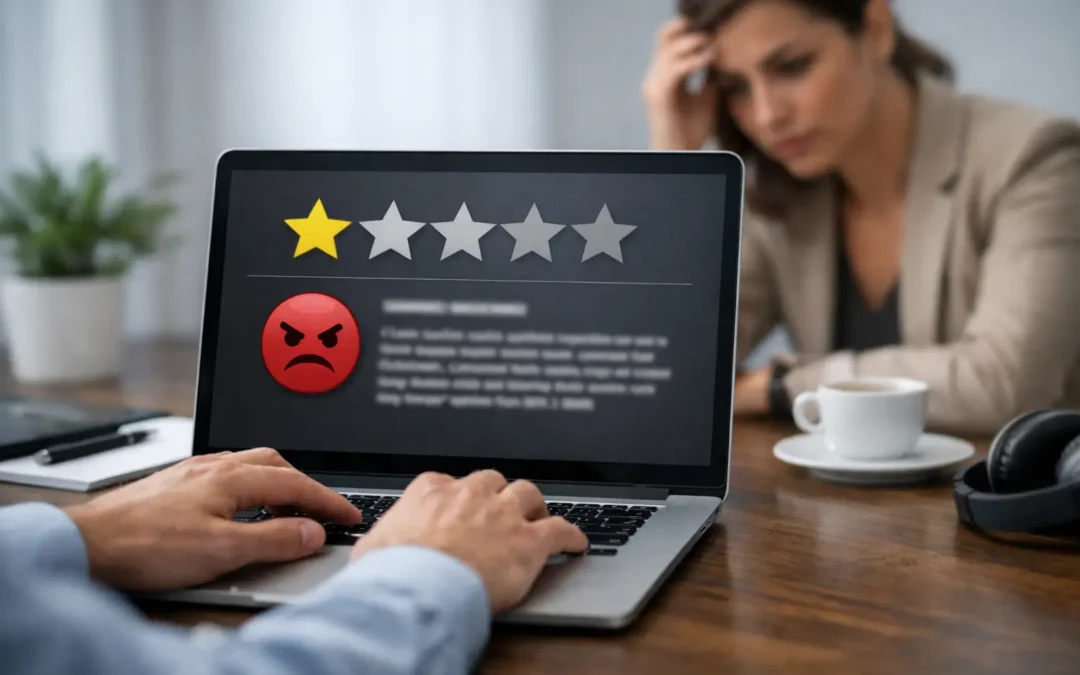
A one-star review can cost you more than pride. It can cost clicks, calls, and booked jobs – especially when a prospect is comparing three businesses on Google and your latest public reply looks defensive, careless, or missing altogether. That is why strong negative review response examples matter. The right response does two jobs at once: it speaks to the unhappy customer, and it reassures every future customer reading the exchange.
For most Canadian businesses, review management is not a side task. It is part of lead generation. Reviews influence local rankings, click-through rates, and trust at the exact moment someone is ready to buy. A weak response can make a bad review feel bigger. A sharp, calm, professional response can limit damage and sometimes win the customer back.
What good negative review response examples have in common
The best responses are short, specific, and controlled. They do not argue point by point in public. They do not copy and paste a corporate script that sounds empty. They acknowledge the experience, show accountability where appropriate, and move the conversation offline when details are needed.
That last part matters. Not every bad review deserves the same response. If the complaint is valid, your job is to de-escalate and offer a path forward. If the review is misleading, emotional, or plainly false, your job is to stay professional and protect your credibility. Prospects are not looking for perfection. They are looking for signs that your business handles problems like a pro.
A strong response usually includes four elements: a polite acknowledgment, a brief expression of concern, a clear next step, and a calm tone. If you skip one of those, the reply often feels incomplete.
12 negative review response examples you can actually use
These examples are starting points, not scripts to post word for word every time. Adjust them to match the situation, your industry, and what you can genuinely offer.
1. When the complaint is valid and service fell short
Hi [Name], thank you for your feedback. We are sorry to hear your experience did not meet the standard we aim to deliver. This is not the level of service we want associated with our business. Please contact us at [phone/email] so we can review what happened and work toward a resolution.
This works because it accepts the concern without overexplaining. It also signals accountability.
2. When there was a long wait or delayed response
Hi [Name], we appreciate you bringing this to our attention. You are right to expect a faster response, and we understand your frustration. We are reviewing this delay with our team now. If you are open to it, please reach out at [phone/email] so we can make this right.
This is useful for clinics, legal offices, trades, and any service business where timing affects trust.
3. When the customer says your staff was rude
Hi [Name], we are sorry to hear you felt disrespected during your interaction with our team. We take customer service seriously and do not want anyone leaving with that impression. Please contact us directly at [phone/email] so we can look into this further.
Notice what it does not do. It does not accuse the reviewer of lying, and it does not defend the employee in public before investigating.
4. When pricing is the issue
Hi [Name], thank you for sharing your feedback. We understand that pricing can be frustrating, especially when expectations are not aligned upfront. We work hard to provide clear estimates and strong value, but we would be happy to review your concerns directly. Please contact us at [phone/email].
Pricing complaints are common. You do not need to apologize for charging properly. You do need to show that your business is transparent.
5. When the review is vague and gives no real detail
Hi [Name], we are sorry to see this feedback and would like to understand more about your experience. We take concerns seriously, but we are unable to identify what happened based on the details provided. Please contact us at [phone/email] so we can investigate and assist.
This is a smart middle ground. It invites resolution without validating an unclear accusation.
6. When the review appears fake or you cannot find the customer
Hi [Name], we take all feedback seriously, but we are unable to locate a record of your experience with our business. If this review was intended for us, please contact us at [phone/email] with more details so we can look into it right away.
This is far better than saying, “You were never a customer.” That kind of reply can look combative, even if you are right.
7. When the customer is angry and emotional
Hi [Name], we are sorry to hear you had a frustrating experience. We understand your concerns and would appreciate the chance to speak with you directly to better understand what happened. Please contact us at [phone/email] so we can address this properly.
The goal here is to lower the temperature. Matching their emotion is a losing move.
8. When there was a misunderstanding about scope or policy
Hi [Name], thank you for your feedback. We are sorry there was a misunderstanding regarding our service and policy. We do our best to explain expectations clearly, but we understand this was not your experience. Please contact us directly so we can review the details with you.
This wording protects your business while still sounding reasonable.
9. When the issue has already been resolved privately
Hi [Name], thank you for your feedback. We appreciate the opportunity to speak with you directly and are glad we were able to address your concerns. We are always working to improve and value your input.
This response is simple, but it shows future readers that your team follows through.
10. When you owe a direct apology
Hi [Name], we sincerely apologize for your experience. We fell short here, and we understand why you are disappointed. We are reviewing what happened internally and would welcome the chance to speak with you directly at [phone/email].
Use this when your business clearly made the mistake. A direct apology can build trust faster than a defensive explanation.
11. When the complaint targets a regulated or sensitive industry
Hi [Name], we are sorry to hear about your concerns. Because privacy matters to us, we cannot discuss the details of any customer matter publicly. Please contact our office directly at [phone/email], and we will be happy to review this with you.
This is especially relevant for healthcare, legal, and financial services. Public restraint is part of professionalism.
12. When you want to show improvement after repeated issues
Hi [Name], thank you for taking the time to share this feedback. We are sorry your experience fell short. Based on feedback like yours, we are actively improving our process to provide better communication and service going forward. Please contact us at [phone/email] if you would like to discuss your experience further.
This works well when multiple reviews point to the same operational problem. It shows action, not just apology.
How to choose the right response
The wrong response usually comes from reacting too fast. Business owners read a harsh review, feel the sting, and reply from emotion. That is understandable, but expensive. A public response is not just customer service. It is marketing, reputation control, and brand positioning in one move.
Start by asking three questions. Is the complaint legitimate? Is there a private resolution path? Will this response reassure future buyers? If your reply does not serve all three, it probably needs work.
There is also a trade-off between speed and precision. You should respond quickly, but not carelessly. A same-day reply is ideal for most businesses. Still, if the issue involves staff conduct, billing disputes, or legal sensitivity, take the extra time to verify facts before posting.
Mistakes that make bad reviews worse
Some responses do more damage than the original review. The biggest mistake is arguing in public. The second is sounding robotic. The third is saying nothing at all.
If your reply says, “We strive for excellence and value all feedback,” you have not really responded. You have filled space. Customers can tell when a business is hiding behind template language.
Another mistake is oversharing. You may want to prove the customer is wrong, but posting transaction details, timelines, or personal information can make your business look reckless. Even when you win the factual argument, you can still lose trust.
Finally, do not offer blanket compensation in every public reply. It trains customers to escalate publicly for rewards. Sometimes a refund is right. Sometimes a phone call is enough. It depends on the facts and on your margins.
Why this matters for local SEO and lead generation
Review responses are not just reputation hygiene. They affect how your business is perceived in search results, map listings, and comparison checks. A prospect may never visit your website if your review profile raises red flags. On the other hand, a thoughtful response can soften the impact of a low rating and keep the lead alive.
For service businesses in competitive Canadian markets, that edge matters. Whether you run a dental clinic, law firm, HVAC company, franchise location, or B2B service, reviews are part of your sales funnel. The businesses that win are not always the ones with zero complaints. They are the ones that handle complaints with discipline.
At SEO Pros Canada, we see this constantly: businesses invest heavily in traffic generation, then lose conversions because their online reputation is unmanaged. That is a preventable leak in the funnel.
Build a response process before the next bad review hits
If you wait until a one-star review appears, you are already behind. Create response guidelines now. Decide who replies, how quickly they respond, when issues are escalated, and which scenarios need legal or management review. Keep approved response frameworks ready, but leave room for human judgment.
That balance matters. Customers want professionalism, but they also want signs that a real person is paying attention. The best response is not the most polished one. It is the one that sounds credible, calm, and committed to fixing what can be fixed.
A bad review does not have to define your brand. Handled properly, it can prove your business takes problems seriously – and that is often enough to win the next customer.