A Calgary plumber can have the best technicians in the city and still lose calls to a competitor with a weaker website. The difference is often local search visibility. Understanding how Canadian businesses rank locally means understanding what Google sees when a customer searches for a service nearby, compares map listings, and decides who looks credible enough to contact.
Local rankings are not won by one trick, a pile of keywords, or a generic marketing package. They come from matching the right business information, local relevance, reputation, and website signals to the searches that bring in real customers.
How Canadian Businesses Rank Locally in Search
Google’s local results are designed to answer immediate, location-based questions. Someone searching “family lawyer Calgary,” “dentist near me,” or “commercial snow removal Mississauga” is not looking for a broad industry article. They want a business they can call, visit, or request a quote from now.
For these searches, Google usually weighs three core ideas: relevance, distance, and prominence. Relevance is how closely your business information and website match the search. Distance is how close your verified location or service area is to the searcher. Prominence is the evidence that your business is established, trusted, and known online.
You cannot control every element. A business in Airdrie will not always outrank a business physically located in downtown Calgary for a downtown search. But you can control whether Google understands what you offer, where you operate, and why customers should choose you.
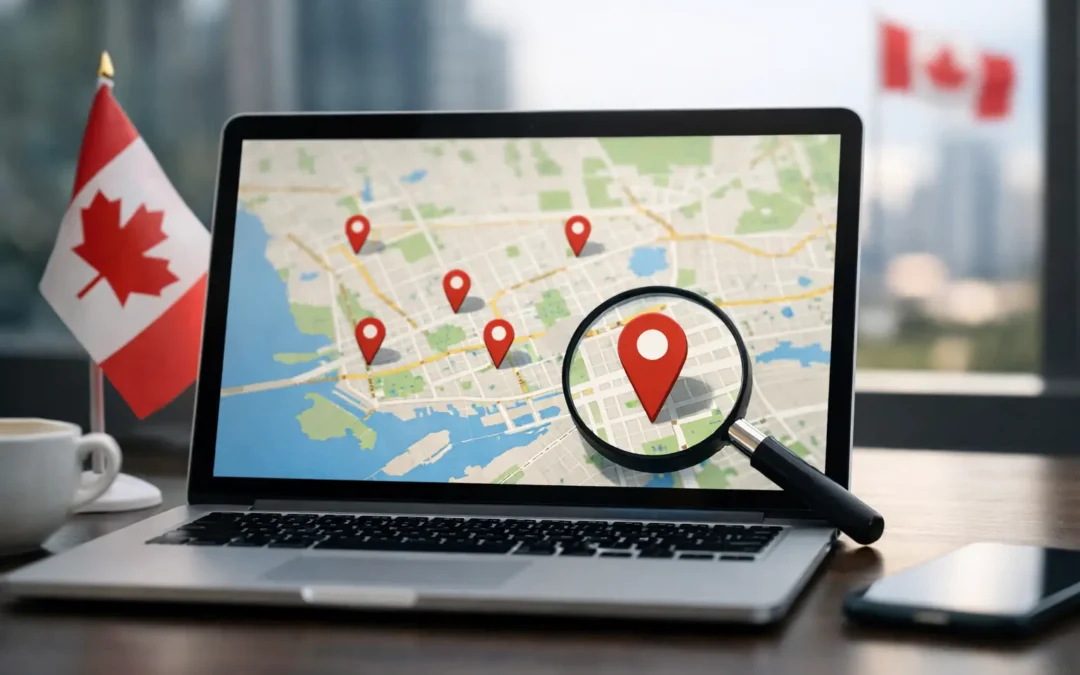
Local SEO also has two different battlegrounds. The local map pack is the group of business listings shown near the top of a location-based search. Organic local results are the regular website pages below it. A strong strategy targets both because customers use both. Some call directly from Maps; others research your services, reviews, and credentials before converting through your website.
Start With a Fully Built Google Business Profile
Your Google Business Profile is often the first asset a prospect sees. Treating it as a one-time setup is a costly mistake. It needs accurate, complete, and consistent information that reflects how your business actually operates.
Use the correct business name, primary category, contact details, hours, website address, and physical location. Choose the most specific category available. A personal injury law firm should not rely on a vague category if a more relevant legal category exists. A Calgary HVAC contractor should clearly identify the services that generate its best leads.
Service-area businesses need particular care. If customers do not visit your location, do not use a virtual office, mailbox, or co-working address simply to appear in a city. That can create verification problems, suspension risk, and a frustrating cleanup later. Set up the profile around Google’s eligibility rules, then define the real areas you serve.
Complete the service list, write a useful business description, add current photos, and keep holiday hours updated. These details may seem basic, but incomplete profiles send weak relevance signals and lose trust with customers. A listing with no recent photos, unclear hours, and five-year-old reviews does not compete well against an active, well-managed local competitor.
Build Location Relevance on Your Website
Google needs more than a map listing to understand your market. Your website should make it clear which services you provide, who they are for, and where you provide them.
Create dedicated service pages for meaningful offerings rather than forcing every service into one generic page. If a dental clinic offers implants, Invisalign, emergency dentistry, and family care, each priority service deserves clear, useful content. The goal is not to repeat a city name in every sentence. The goal is to answer the questions a local buyer has before booking.
Location pages can help when they represent genuine markets you serve and contain useful local detail. A multi-location business may need a page for each office. A contractor serving Calgary, Cochrane, Okotoks, and Airdrie may need carefully written service-area pages. What does not work is publishing dozens of thin pages that only swap one city name for another.
Strong local pages explain your service, process, qualifications, pricing factors, service area, and next step. They may include local project examples, team information, testimonials, or frequently asked questions that reflect real customer concerns. That content gives Google context and gives visitors a reason to stay, call, or complete a form.
Technical performance matters as well. A slow mobile site, broken contact form, confusing navigation, or missing click-to-call option wastes the visibility you have earned. Ranking is valuable only when traffic can convert.
Make Business Information Consistent Everywhere
Citations are online mentions of your business name, address, phone number, and website. Canadian businesses often have messy citation profiles because they have moved offices, changed phone numbers, rebranded, or inherited outdated listings from previous marketing providers.
Google does not need every directory on the internet. It does need confidence that your business details are accurate. Major Canadian directories, industry-specific platforms, local chambers, supplier sites, and trusted business databases can all reinforce that confidence when the information matches.
Start by standardizing your core business details. Decide how your address, suite number, phone number, and legal or operating name should appear. Then correct duplicate and outdated profiles. This is especially important for practices with multiple professionals, franchises, clinics, and businesses that have changed ownership.
Citation building is not glamorous, but it is foundational. A business with conflicting addresses across the web creates uncertainty for search engines and customers alike. A clean, consistent presence supports local rankings and reduces lost leads.
Reviews Create Visibility and Win the Click
Reviews influence local performance in two ways. They contribute to prominence signals, and they shape whether a prospect chooses you over the businesses beside you. A five-star rating with recent, detailed feedback earns attention. So does a professional response when a customer raises a legitimate concern.
Build a review process into your customer experience. Ask after the service has been completed and the customer has had a fair chance to judge the result. Make the request direct and easy. Staff can ask in person, while follow-up email or text can provide a timely reminder.
Never buy reviews, offer incentives in exchange for positive ratings, or pressure unhappy customers to stay silent. These shortcuts create compliance risk and can damage trust faster than they improve a star average.
Review quality matters as much as volume. A steady stream of authentic comments mentioning the service, experience, and community is more persuasive than a sudden burst of vague five-star ratings. Reply to both positive and negative reviews. Your response is not only for the reviewer. It is proof for the next customer that your business is accountable.
Earn Local Authority Beyond Your Own Channels
Prominence grows when respected local sources mention and reference your business. That may come from local news coverage, community sponsorships, professional associations, partnerships, supplier relationships, charities, or industry publications.
The best local authority work is tied to genuine business activity. A Calgary accounting firm might contribute useful tax-season guidance to a local organization. A home builder might support a community event or publish a detailed project case study. A B2B company might be featured by a regional trade association. These efforts create legitimate visibility that cannot be replicated by low-quality link packages.
Be selective. One relevant mention from a credible Canadian source can carry more practical value than dozens of unrelated directory links. Focus on opportunities that would still make business sense if Google did not exist.
Measure Calls, Leads, and Revenue – Not Just Positions
Rankings fluctuate by neighbourhood, device, search history, and competition. A report showing you in first place from one postal code does not automatically mean your phones are ringing.
Track the actions that matter: phone calls, form submissions, booked consultations, direction requests, qualified leads, and closed revenue. Connect those outcomes to your local SEO work wherever possible. This helps identify whether a service page needs stronger conversion messaging, whether reviews are improving lead quality, or whether a paid search campaign should support a competitive local term while organic visibility grows.
For businesses in crowded Canadian markets, local SEO is rarely a one-month project. Competitors update their profiles, collect new reviews, improve pages, and invest in advertising. The businesses that keep gaining ground are the ones that maintain accurate data, publish useful local content, protect their reputation, and respond quickly when performance changes.
SEO Pros Canada approaches local visibility as a lead-generation system, not a vanity ranking exercise. The right plan depends on your market, service area, competitive pressure, and what a new customer is worth to your business.
Your next local customer is already searching for an answer. Make sure Google can verify your business, understand your relevance, and present you as the clearest choice when that search happens.