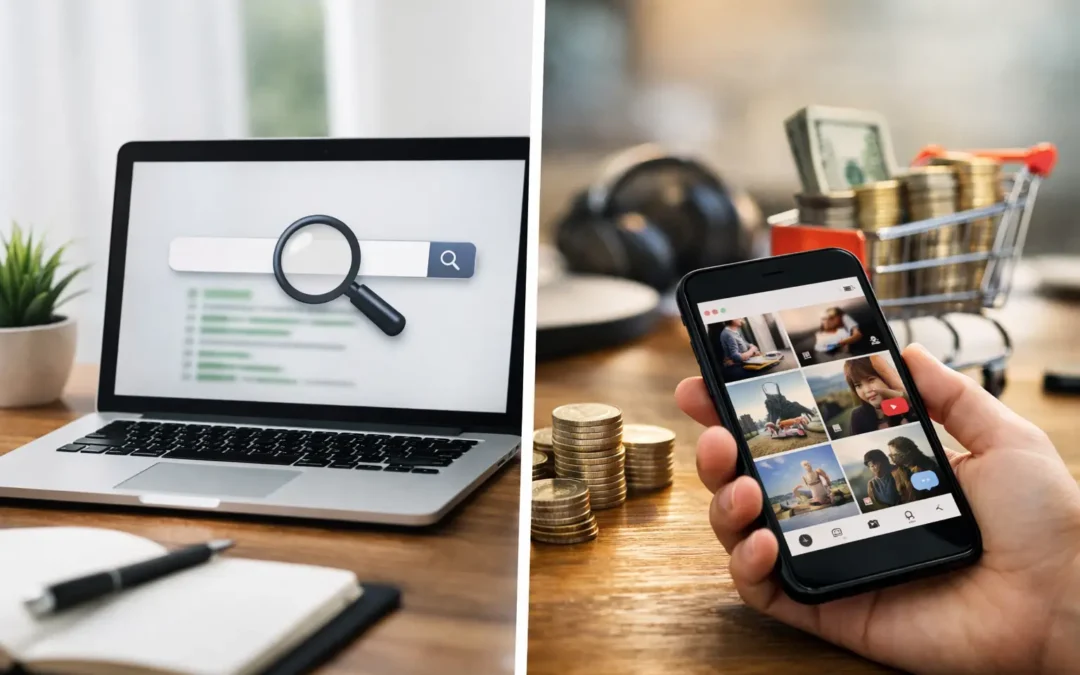
A Calgary business can spend thousands on social ads this month and see leads by Friday. It can also build organic search visibility that keeps generating enquiries long after the first campaign ends. That is the real decision behind organic search versus paid social: not which channel is universally better, but which one can produce the right type of demand for your business at the right stage of growth.
For service businesses, the answer is rarely to choose one channel and ignore the other. Search and social do different jobs. The companies that outperform competitors understand the difference, fund each channel with a clear purpose, and measure results beyond clicks and impressions.
Organic Search Versus Paid Social: The Core Difference
Organic search captures existing demand. When someone searches “Calgary personal injury lawyer,” “emergency furnace repair near me,” or “best accounting firm for small business,” they are already looking for an answer, provider, or quote. Your SEO work puts your business in front of that person when intent is strongest.
Paid social creates and redirects demand. A targeted Facebook, Instagram, LinkedIn, or TikTok campaign reaches people based on location, interests, behaviours, job titles, or audiences similar to your existing customers. They may need your service eventually, but they were not necessarily looking for it when your ad appeared.
That difference affects everything: how quickly campaigns produce activity, how leads behave, what creative is needed, and how you should evaluate return on spend.
Organic search is built around relevance, authority, technical performance, local signals, and useful content. Paid social is built around targeting, creative, offer strength, audience testing, and conversion tracking. Both require professional execution. Neither is a set-it-and-forget-it channel.
When Organic Search Produces Better Leads
SEO is often the stronger long-term investment for Canadian businesses that sell high-intent services. Consider a dental clinic, law firm, restoration company, B2B consultant, healthcare provider, or commercial contractor. Prospects commonly turn to Google when the problem is urgent, expensive, or requires local trust.
A person searching for “commercial roofing contractor Calgary” is closer to a buying decision than someone scrolling past a commercial roofing ad while checking Instagram. The searcher has raised their hand. Your job is to earn the click, make the next step easy, and prove that your business is credible enough to contact.
Organic search can also compound. A well-built service page, locally relevant content piece, strong Google Business Profile, and consistent review strategy can keep producing visibility without a charge for every individual click. Rankings are not permanent, and competitors will keep working to take them from you, but successful SEO creates an asset rather than a short campaign spike.
That makes it particularly valuable when your customer lifetime value is high. If one retained legal client, recurring HVAC customer, franchise location, or enterprise software account is worth thousands of dollars, building consistent search visibility can deliver a strong return over time.
The trade-off: SEO takes time
Organic search is not the right answer if you need leads next week and have little existing visibility. Competitive terms may take months of focused work to move. A new website with thin content, weak local listings, few reviews, and no authority cannot simply demand first-page rankings.
A credible SEO program starts with a technical and competitive assessment, then fixes the barriers holding a site back. It builds pages around the services and locations that matter, improves local trust signals, and earns authority over time. That work is valuable, but it is not instant.
Businesses that quit after 60 days often stop just before the foundation starts paying off. Businesses that expect immediate results from SEO are usually reacting to bad sales promises, not the reality of how search works.
When Paid Social Is the Better Move
Paid social is built for speed, visibility, and controlled testing. If your business is launching a new service, promoting a time-sensitive offer, filling an event, recruiting staff, or generating awareness in a defined local market, social advertising can put a message in front of the right audience quickly.
It is also useful when people do not naturally search for what you sell. A Calgary home renovation company may get search leads for kitchen renovations, but a campaign featuring a dramatic before-and-after project can introduce a basement development offer to homeowners who had not yet started researching. A B2B SaaS company can use LinkedIn to reach specific decision-makers before they search for a solution category.
The strongest paid social campaigns do not rely on generic “contact us” messaging. They give people a reason to act now: a useful consultation, a clear estimate process, a limited seasonal offer, a demonstration, a guide, or a compelling proof point. Strong video, customer results, and credible testimonials can help reduce the trust gap created by interruptive advertising.
The trade-off: attention is rented
Social ads can stop generating leads the moment the budget stops. Cost per lead can also rise as audience frequency increases, competitors bid more aggressively, or the creative goes stale. A campaign that worked beautifully in its first two weeks may weaken in month two if it is not monitored and refreshed.
Lead quality can vary as well. Social users may submit a form because they are curious, attracted by an offer, or simply moving quickly through their feed. That does not make paid social ineffective. It means your follow-up process matters. Fast response times, clear qualification questions, call tracking, and a sales team that can convert interest into appointments are essential.
For lower-consideration purchases, visually appealing services, and offers that solve an emotional or aspirational problem, paid social can be highly profitable. For urgent, technical, or high-trust services, it often works best as a support channel rather than the only source of leads.
Compare Cost by Revenue, Not Clicks
Business owners often ask whether SEO or social advertising costs less. That question is too narrow. The better question is: which channel produces profitable customers at a sustainable cost?
SEO usually requires a monthly investment in strategy, content, technical improvements, local SEO, reporting, and ongoing authority building. The cost is predictable, but results build gradually. Paid social requires ad spend plus campaign management, creative development, landing pages, and testing. It can create faster volume, but each result depends on continued spending.
Neither a cheap click nor a cheap lead guarantees revenue. A low-cost social lead that never answers the phone is not a win. A more expensive organic lead from someone actively comparing providers may be far more valuable. Track booked calls, qualified opportunities, sales, average deal value, and retained revenue whenever possible.
For local companies, also look at where leads come from. A campaign that generates form fills outside your service area can make a dashboard look busy while wasting your team’s time. Precise location targeting, service-area pages, and clean reporting prevent that problem.
Build a Channel Mix Around Your Sales Cycle
The best marketing plan is based on your buying cycle, margins, capacity, and current visibility.
If your business needs immediate leads while SEO gains traction, paid social can support short-term demand generation. If customers typically research heavily before choosing a provider, SEO should receive serious attention because Google is where that research happens. If your sales cycle is long, social can keep your brand visible through retargeting while organic content answers deeper questions and captures high-intent searches.
A practical approach often looks like this: use SEO to build high-value service and local visibility, use paid social to promote timely offers or target defined audiences, then retarget site visitors with messages that match the page they viewed. Someone who read your service page needs different messaging than someone who watched a brand video for three seconds.
This combination also gives your business more resilience. When search rankings fluctuate, paid campaigns can protect lead flow. When social costs rise, organic traffic can reduce your reliance on rented attention. SEO Pros Canada builds strategies around this kind of commercial reality, not a one-channel sales pitch.
What to Measure Before You Increase Budget
Start with baseline numbers: current organic traffic, rankings for revenue-driving searches, cost per qualified lead, close rate, average customer value, and lead response time. Then set channel-specific expectations.
For SEO, watch non-branded visibility, organic conversions, calls from local search, ranking movement for meaningful terms, and revenue from organic leads. For paid social, monitor cost per qualified lead, booked appointments, conversion rate by audience, creative performance, frequency, and sales outcomes.
Do not make major decisions based on one week of data. At the same time, do not let a weak campaign run for months without testing a better offer, audience, landing page, or follow-up process. Good marketing is disciplined: give each channel enough time to perform, then make decisions based on evidence.
The next dollar you spend should go where your business has the clearest path from attention to revenue. Build search visibility for the demand already looking for you, use social to create demand where it makes sense, and make sure every lead reaches a team prepared to turn interest into a customer.