
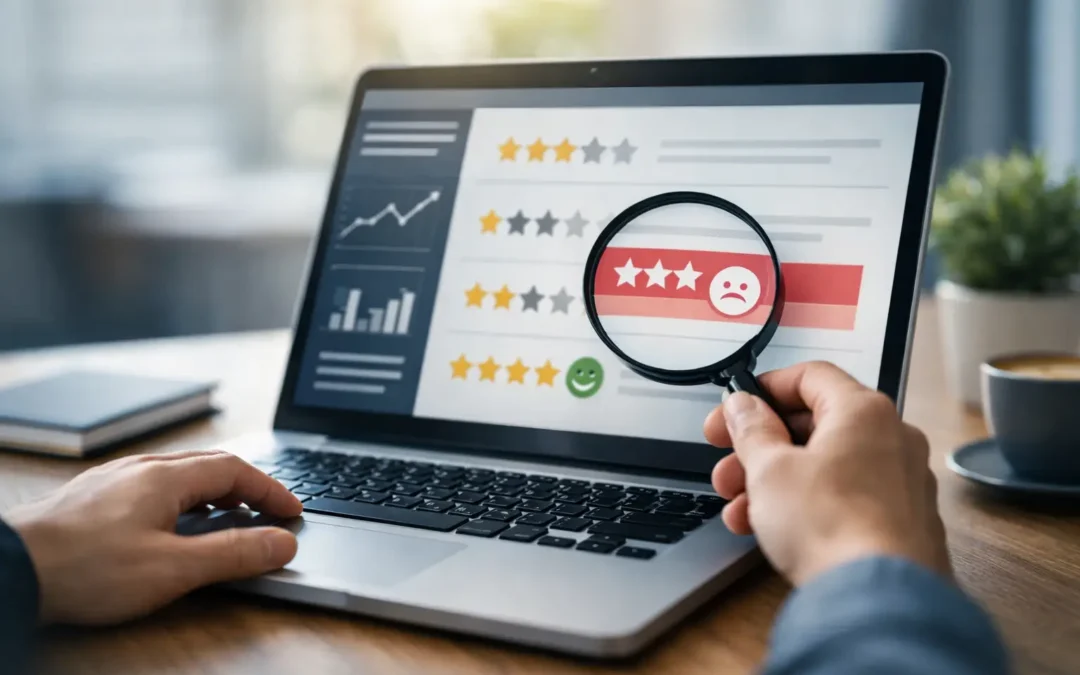
A one-star review does not need to be fair to affect your next sale. A frustrated customer can post it in minutes, and prospective customers may see it before they ever visit your website, call your office, or request a quote. That is how review monitoring protects brands: it gives businesses an early warning system for public feedback that can influence trust, local search visibility, and revenue.
For Calgary and Canadian service businesses, the stakes are especially high. A homeowner comparing plumbers, a patient researching a clinic, or a B2B buyer shortlisting vendors will often scan reviews before taking the next step. If they see unanswered complaints, repeated concerns, or an outdated rating, they may choose a competitor without giving your business a chance to respond.
How Review Monitoring Protects Brands From Lost Trust
Review monitoring is the ongoing process of tracking, analysing, and responding to customer feedback across Google, Facebook, industry directories, and other platforms where your customers make decisions. It is not simply checking your Google Business Profile when business is slow. It is a consistent process that helps you spot issues while they are still manageable.
The first benefit is speed. A complaint about missed communication, billing confusion, poor service, or a staff interaction can become more damaging when it sits unanswered for weeks. A prompt, professional response shows future customers that your business is accountable and willing to solve problems. That does not always change the original reviewer’s mind, but it can change how everyone else interprets the review.
The second benefit is context. A negative review may point to a genuine operational problem, a one-off misunderstanding, a competitor attack, or feedback posted on the wrong business profile. Monitoring allows you to investigate instead of reacting emotionally. This matters because an aggressive public reply can create more reputational damage than the original complaint.
The third benefit is consistency. Customers expect the same standard of service whether they find you through Google Maps, social media, a legal directory, or a healthcare listing. When business information, review responses, and customer experience vary widely across platforms, trust drops. A monitored reputation gives your brand a more controlled and credible public presence.
Reviews Influence More Than Reputation
Reviews are often treated as a customer service issue. They are also a marketing and lead-generation issue.
For local businesses, review quantity, recency, rating, and response activity can affect how credible your listing looks in Google’s local results. Google does not publish a simple formula that says a five-star rating guarantees higher rankings. Still, strong and current review signals can support local visibility because they demonstrate real customer engagement and help searchers choose your listing over another one.
That distinction matters. Review monitoring will not replace technical SEO, quality content, citation accuracy, or a well-built website. It works alongside them. A business can rank well and still lose leads if its profile is filled with unaddressed complaints. It can also have excellent reviews and remain hard to find if its local SEO foundation is weak.
Reviews also reveal the language customers use when describing your company. If clients repeatedly praise fast turnaround times, knowledgeable staff, transparent estimates, or a specific service, those phrases can inform website copy, service pages, paid search messaging, and sales scripts. Feedback becomes market intelligence when someone is actively looking for patterns.
The risk of letting negative feedback sit
An unanswered negative review can create three separate problems. First, it may discourage the person reading it from contacting you. Second, it may signal to the original reviewer that you do not care, making them less likely to update their feedback after a resolution. Third, it can hide a recurring problem inside your operations.
For example, if several reviews mention that quote requests go unanswered, the real issue may not be your reputation strategy. It may be slow lead follow-up, unclear intake ownership, or a missed call process. Monitoring helps management identify that pattern before it costs more business.
What a Strong Review Monitoring Process Looks Like
Effective monitoring is not about responding to every review with the same generic sentence. Customers can spot a copied response immediately. The goal is to protect the brand while treating feedback as useful business information.
A practical process has four parts:
- Track every relevant platform. Start with Google, then include Facebook and the directories that matter in your industry. A law firm, dental practice, franchise location, contractor, and SaaS company may each need a different platform mix.
- Set response standards. Positive reviews deserve acknowledgment, while negative reviews need a measured response and a clear internal escalation path. Many businesses aim to respond within one or two business days, but urgent claims should be reviewed sooner.
- Document recurring themes. Tag reviews by issue, service line, location, staff mention, or sentiment. Over time, this exposes patterns that individual reviews do not reveal.
- Request reviews ethically. Ask satisfied customers at the right time, make the process simple, and never pressure people to leave a positive review. Avoid review gating, fake reviews, incentives that violate platform rules, or attempts to suppress legitimate feedback.
The right response depends on the review. A positive review can receive a brief, personal thank-you that reinforces the service mentioned. A legitimate complaint should acknowledge the concern, avoid sharing private details, and move the conversation offline where appropriate. A false or abusive review may need to be reported through the platform, but businesses should not assume every negative comment can be removed.
What to say when a review is negative
A useful public response is calm, specific, and short. Thank the reviewer for raising the concern, acknowledge the experience without admitting facts you have not verified, and provide a direct route to resolve the issue. For example: “We are sorry to hear your experience did not meet expectations. We take concerns about communication seriously and would like to review what happened. Please contact our office at your earliest convenience so we can help.”
This approach is safer than debating details in public. It also protects privacy. Healthcare providers, legal professionals, and other regulated businesses must be particularly careful not to disclose personal information or confirm a client relationship in a reply.
There is a trade-off, however. Overly cautious responses can sound cold, while overly detailed responses can create legal or privacy risks. Your team needs approved response guidelines, plus a clear rule for when management, customer service, or legal counsel must take over.
Review Monitoring Helps Protect Multi-Location Brands
Franchises and multi-location businesses face an added challenge: one location’s poor review experience can affect confidence in the entire brand. Customers often do not separate a franchisee from the larger company. They see one name, one logo, and one promise.
Central monitoring helps identify locations that need support, training, or faster response coverage. It also prevents major inconsistencies, such as one office replying professionally to complaints while another ignores them. At the same time, responses should retain local relevance. A centrally managed script with no location-specific detail may protect compliance, but it rarely builds customer confidence.
For organizations with several offices, use shared standards and reporting, then give local managers enough authority to resolve customer issues quickly. The best reputation management programme is connected to real operational improvement, not just polished replies.
Turn Reviews Into a Competitive Advantage
Many businesses only pay attention to reviews after a damaging post appears. That is reactive, and it gives competitors room to win customers who were already considering you.
A proactive approach monitors ratings and new feedback regularly, responds with purpose, identifies recurring service gaps, and creates a steady flow of authentic customer reviews. It also compares your public reputation with the businesses showing up beside you in local search results. If your closest competitor has more recent reviews, clearer responses, and a stronger rating, that is not just a branding gap. It is a conversion gap.
SEO Pros Canada helps businesses connect reputation management with local SEO, content, and lead generation so their online presence supports the sales process from first search to first call. The goal is not to pretend every business is perfect. It is to show customers that your business listens, responds, and improves.
Your reputation is already being shaped in public. Monitor it closely enough to make sure your customers, not unanswered complaints, define the story people see.